Tech is just a tool, but life matters.
Building AI that helps people live better.
I build agents that plan, act and verify — from teaching a ship to steer itself to a platform that runs the products around me. Every project here started with a real person or a problem I cared about.
Open to AI / ML · agentic-systems · data · full-stack roles in New Zealand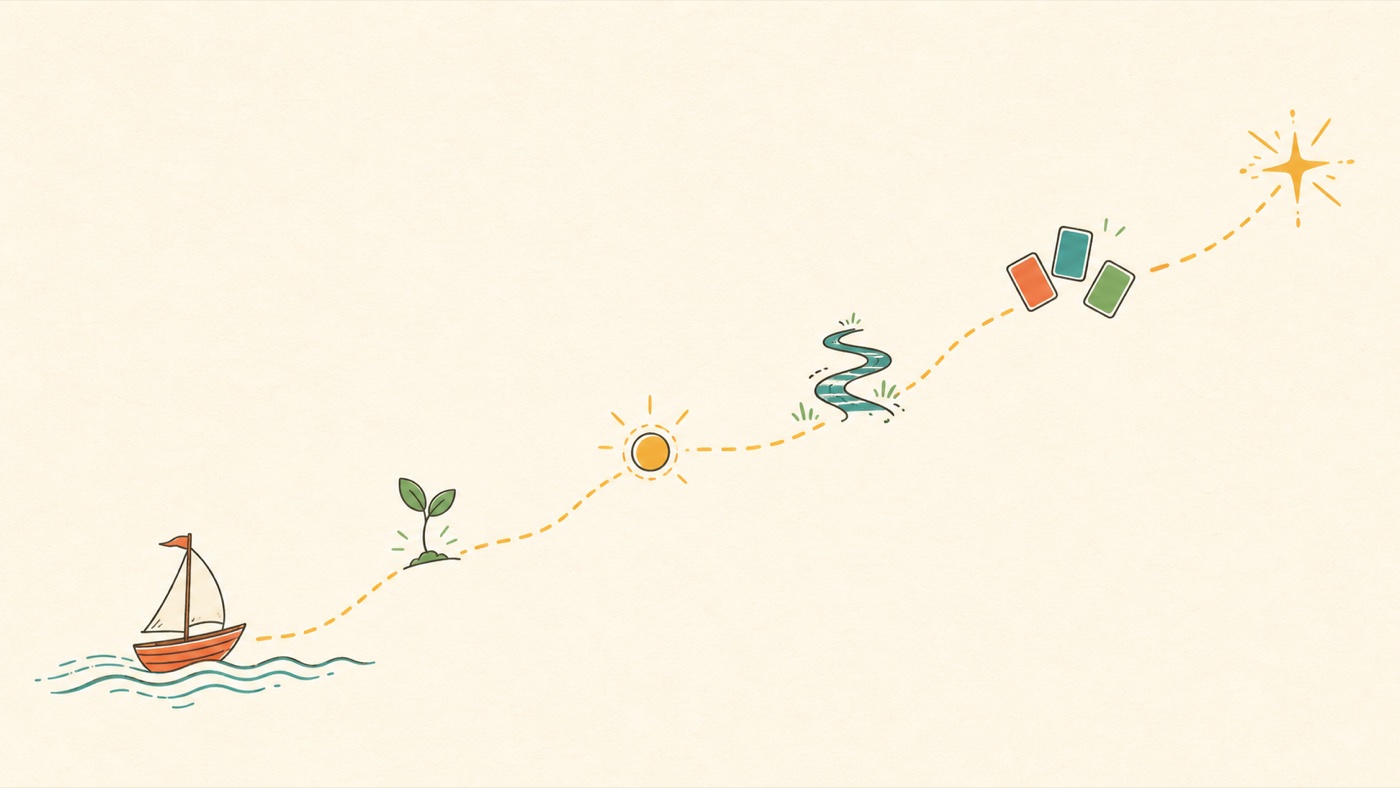 from a boat → to agents that act → to products for real people
It all starts with one agent.Yumi — the flagship ↓

Yumi — the agent that runs everything I build.
Say it in plain language and Yumi plans, calls the right tools, acts across your ecosystem, and verifies the result. Built in three layers: an open-source agent, an enterprise platform, and my own Nexus deployment that powers Mugi, Memori and the hardware around you.
Say it in plain words.The room follows.
The open-source core I wrote runs the whole agentic loop — it plans, calls the right tools, acts, and verifies. The scene beside this is a live trace of it:
- It acts, for real — every chip is an actual tool call:
light,set_curtains, ♪ lo-fi - Then it verifies — the closing line is the product’s own reply, not decoration
- Bring your own function — register
water_plants()in Rust (or 10 other languages); your very next sentence can use it
Open source at the base.A business on top. My ecosystem above.
- L1 · yumi-agent — the open-source core. Free for everyone: anyone can build their own agent with it.
- L2 · Yumi Enterprise — L1 plus multi-tenancy, usage metering & admin. This is the layer built for other companies to run — no external tenants yet.
- L3 · Yumi Nexus — my own deployment of L2. Every app I ship plugs in here and is driven by conversation — it shows off L2, and it grows my own ecosystem.
Register once.Your agent reaches everything.
I built a unified sign-in, Yumi ID. All my apps log in through it — so behind the scenes they share one backend.
- One account — sign up once; subscriptions managed in one place
- Every app signs in with it — Mugi ✓ Memori ✓ and whatever I ship next
- So Yumi sees the whole picture — it reads the capped, reference-only snapshot each app chooses to expose, and picks the right words and the right tools
Then it becomes things people use.Shipped work ↓


Products people actually use.
The line forks to four things I shipped. Mugi and Memori are driven by Yumi; SaKi and Meetup stand on their own — each began with one real person or community.
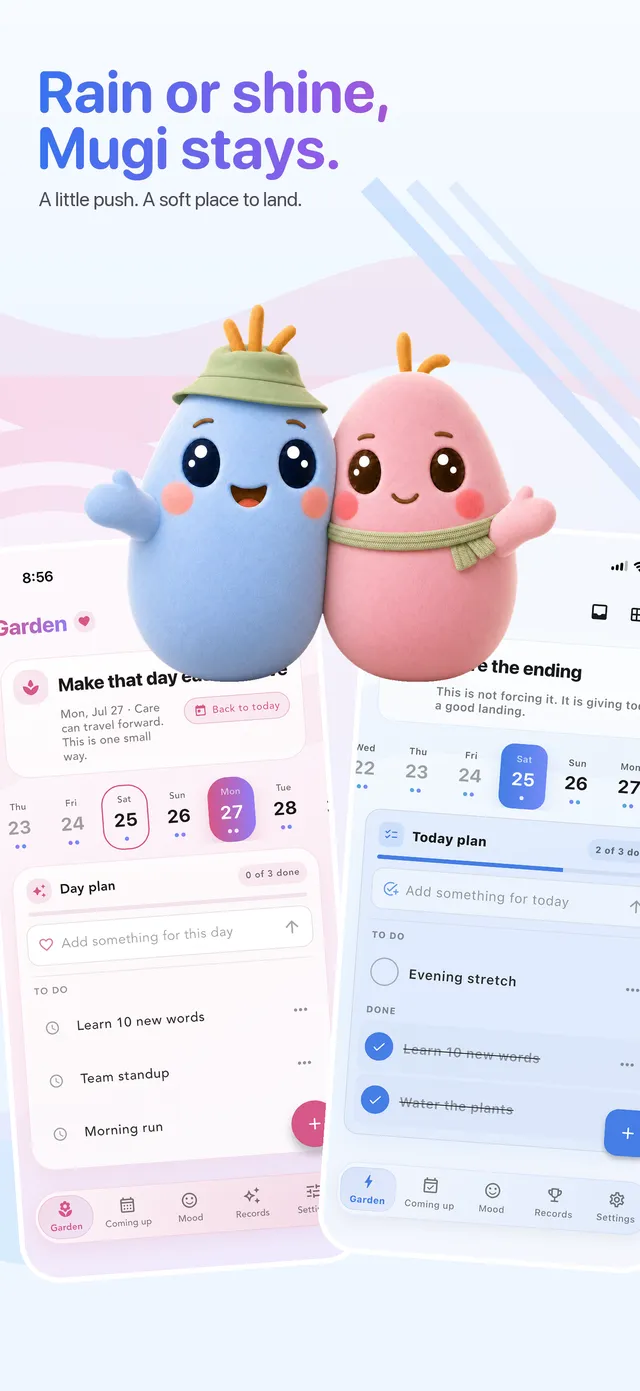
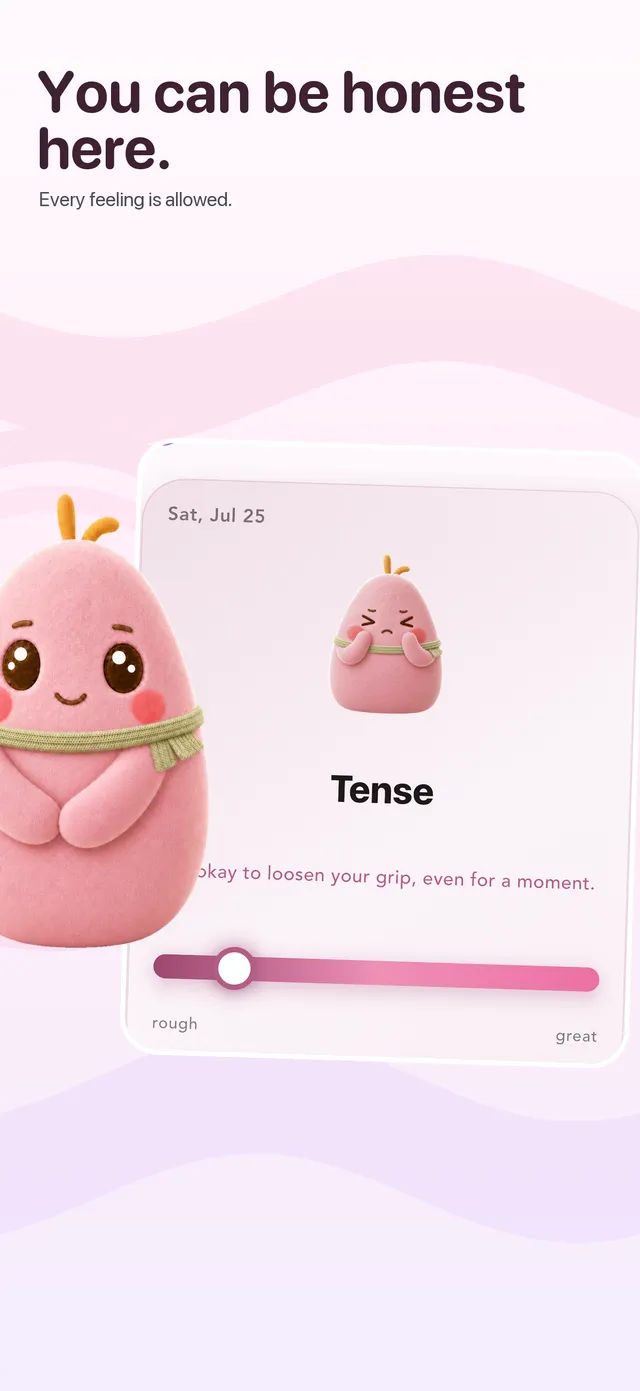








 MugiRain or Shine — tasks, habits & mood diary
A day that keeps itself.Tasks, habits — and how today felt.
“One calm home for your days”: reminders, goals and habits with gentle streaks — and a one-swipe mood diary watched over by Mugi, a sleepy barley buddy who dozes until you log.
- Reminders · goals · habits — three progress modes: check-in, percent, count (“30 sit-ups”)
- Say it to Yumi —
create_seedin chat, and it appears in the app live - Mood, gently — seven levels from rough to delighted; Mugi wakes when you do
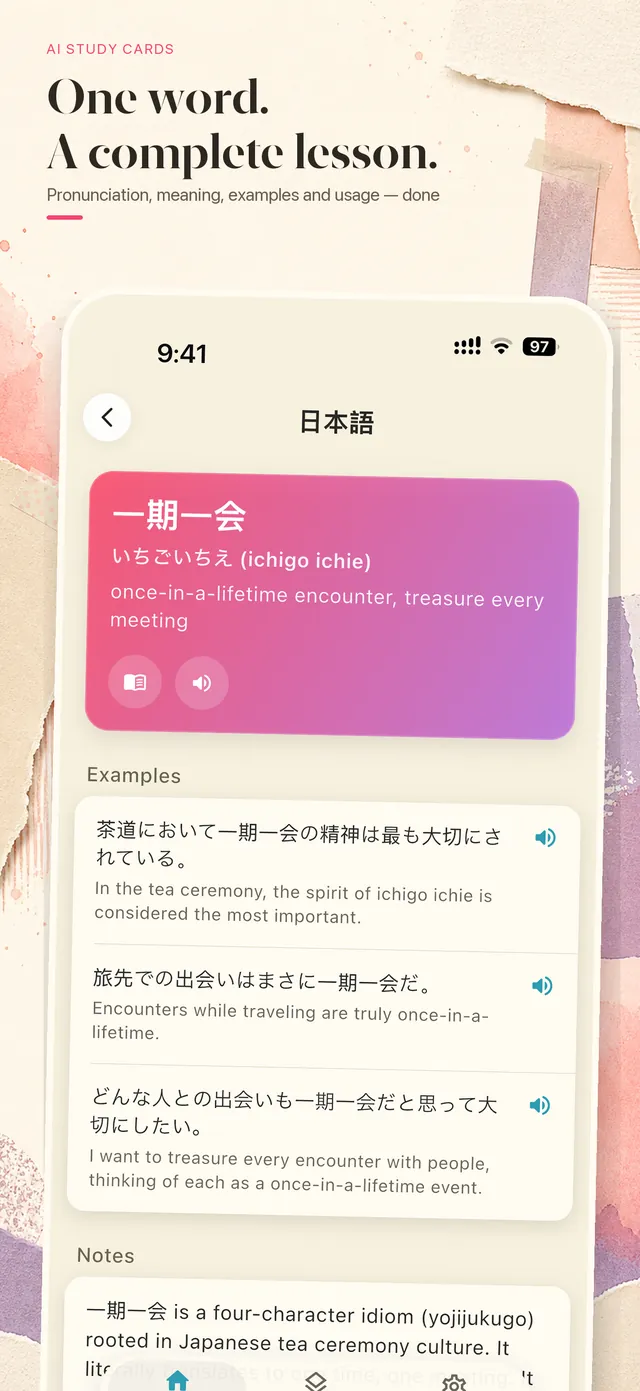
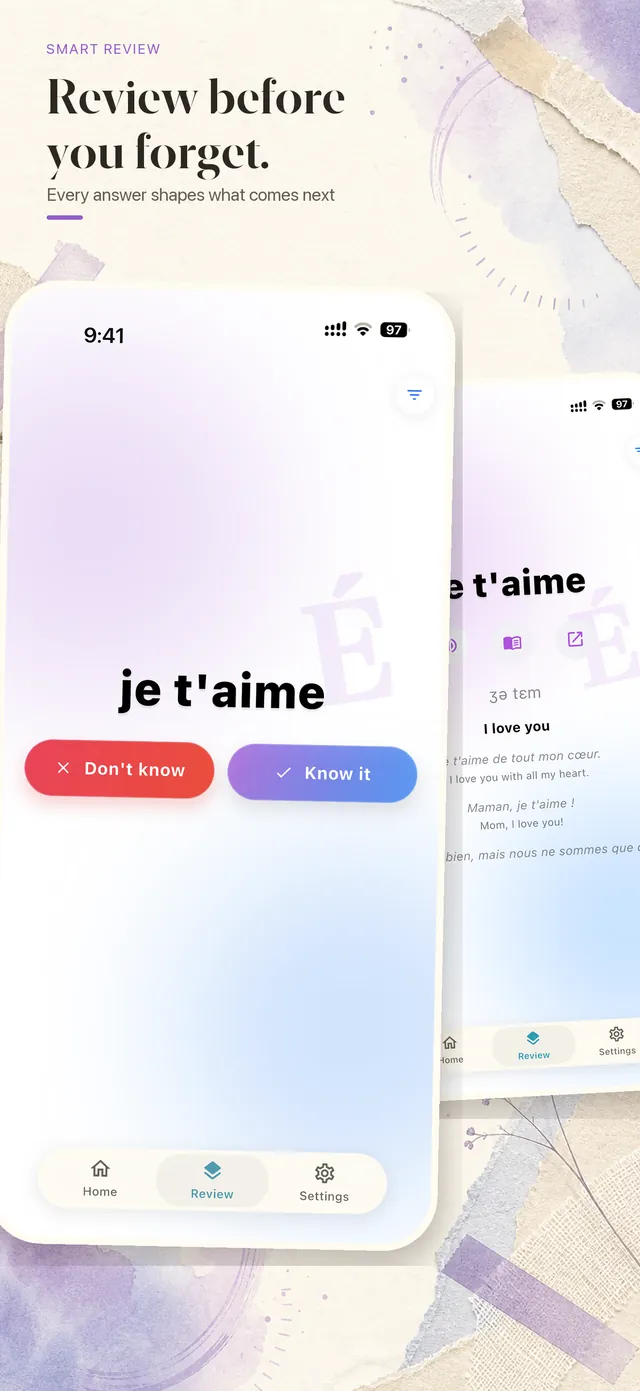
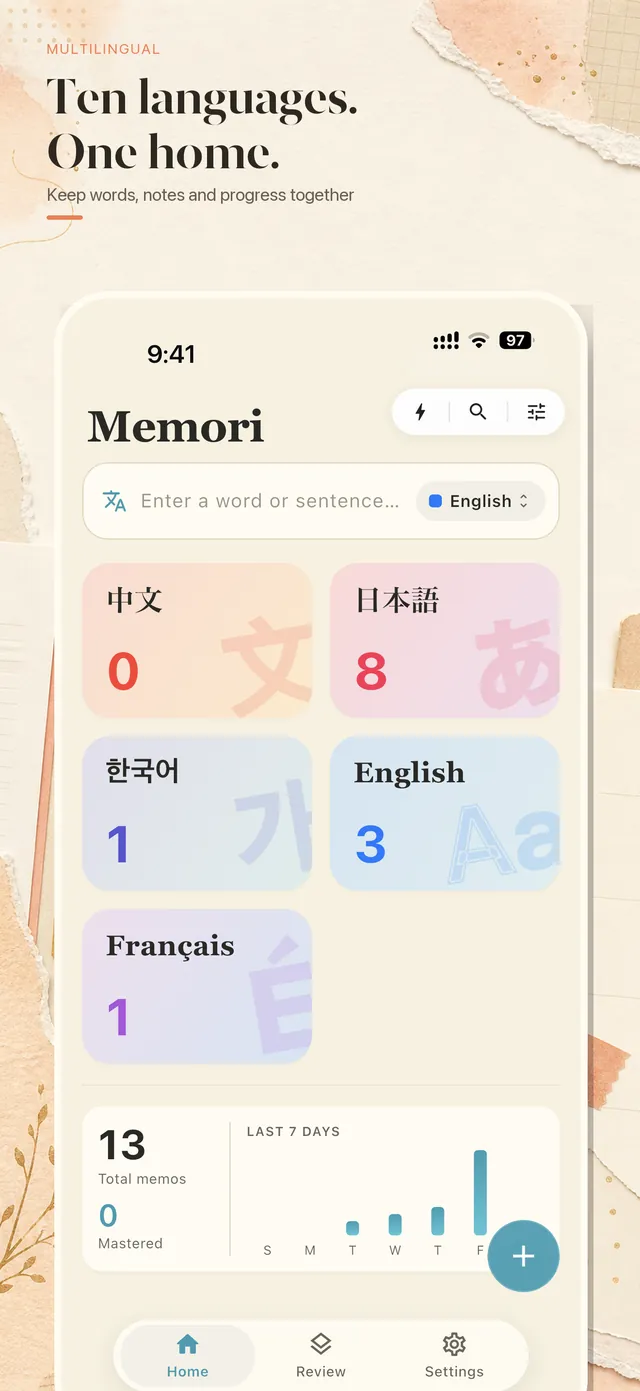
 MemoriNow and Once — AI vocabulary cards & review
Meet a word in the wild.It comes back right before it fades.
Capture words the moment you meet them; one ✨ tap builds the whole card — pronunciation, meaning, examples. Reviews are just “Know it / Don’t know”: a custom forgetting-curve scheduler decides what returns, so there is never a “due” pile.
- ✨ one-tap card — AI fills pronunciation · meaning · examples
- Know it / Don’t know — mastery climbs a ladder of return times: ¼ day → 1 → 3 → 6 → 14 days
- Ten languages — Aa · 文 · あ · 가 · … · Te Reo Ā
 SaKiWalk the Line — an ARKit game
Ever balanced along a painted line as a kid?Record a real path. Walk it again. Don’t step off.
An ARKit game: walk anywhere to record a trail, and SaKi scatters coins and gifts along it. Retrace it inside the corridor — drift, and the fireflies turn red and your heartbeat rises; 1.1 m off and you fall.
- Record by walking — the path is sampled every 0.12 m as you move
- The corridor judge — warn at 0.35 m, fall past 1.1 m; fireflies fade cyan → red
- Shipped as a Christmas gift 🎄 — win, and the confetti says “Merry Christmas!”
Thirty people, four to a table.Everyone meets someone new.
Built for Auckland’s Japanese–English exchange (ようこそ!): check in at the door, tap 🎲, and a history-aware seater balances the languages at every table while avoiding repeat pairings. Your phone shows your table and the round countdown.
- Check-in at the door — bilingual UI, names & language into Firestore
- The seater — language-balance seeding, then minimise repeats (last round counts ×3)
- Your phone is your seat — a big table number and the round’s countdown ring
But the instinct began in research.Research foundations ↓



Decisions grounded in evidence and feedback.
Two research systems, one focus. CiteSeek — my Master’s thesis — searches, cites and verifies with grounded evidence. Ship RL — where it all started — a physics world I built where a policy learns to steer and give way.
Select a claim in a paper.It finds who deserves the credit — and proves it.
An agent that searches the open scholarly record, ranks candidates, pins passage-level quotes and judges each one — with verdicts grounded: a quote only counts if it appears verbatim in the retrieved paper, so the judge cannot invent evidence.
- Search wide — LLM-generated queries fan out to arXiv, Semantic Scholar & OpenAlex, deduped and embedding-ranked
- Follow the citations — snowballing through references lifted retrieval from 11/28 to 28/28 benchmark claims
- Grounded judging — supports / partially / background / unrelated with confidence; R@5 0.91 · MRR 0.84
find_supporting_papers8 km of open water, a rudder,a rulebook — and 5,000 episodes.
My undergraduate thesis built the training world itself: a 4-DOF ship-physics simulator (MMG model, parameterised from a real 111 m container ship) where a Soft Actor-Critic policy learns to hold course and dodge traffic — with the collision rules written into the reward.
- The world — surge · sway · yaw · roll physics; rudder ±35° slewing at 5°/s, one decision every 6 s
- The rulebook — COLREGs encounters (head-on · crossing · overtaking) shaped into rewards: give way to starboard
- The learning — collision-avoidance success 95% after ~4,000 episodes, vs 12–27% for a sparse-reward baseline
Different systems. One pattern.The loop behind the work ↓


Yumi is the full loop. The shipped work proves I can deliver it.
Yumi is the clearest expression of how I build: understand intent, plan, act and verify. The shipped apps prove I can turn that thinking into software for real people. The research contributes two habits underneath it all — ground decisions in evidence, then improve them through feedback.
The loop at left is the pattern. The evidence below is intentionally weighted by how completely each body of work demonstrates it.
Yumi plans, acts and verifies.
The clearest expression of how I think: one system interprets plain-language intent, chooses tools, performs real actions across an ecosystem, and checks what happened before answering.
Mugi · Memori · SaKi · Meetup
Proof that I can carry an idea beyond an AI demo: product decisions, mobile interfaces, backends, auth, deployment, and iteration around people who actually use the result.
I am strongest when I can own the whole path: understand the human problem, design the system, ship the product, observe the result, and make the next version better.
Every loop starts with a real person.Let's talk ↓


Let's build something that acts.
Endlessly curious, and happiest shipping things people actually use. The best way to reach me is a plain email — I answer everything.